

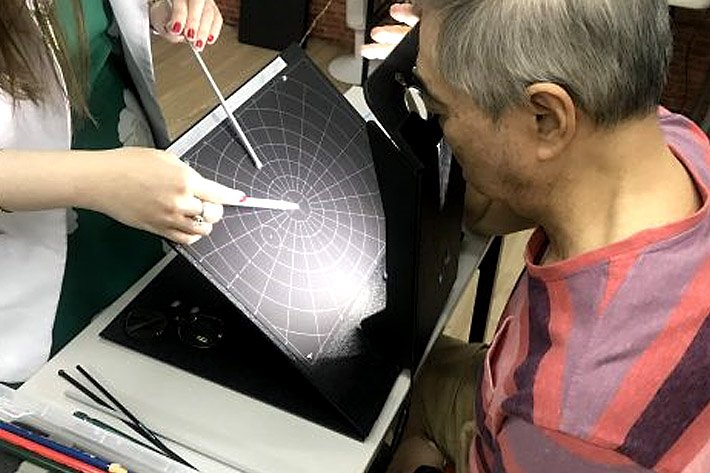
- Concussion or traumatic brain injury (TBI)
- Stroke or Cerebrovascular accidents
- Cortical Vision Impairment (CVI)
- Neurological disorders (e.g., multiple sclerosis, cerebral palsy)
- Developmental delays or post-surgical conditions
Common Signs of Visual Processing Difficulties
Vision problems aren’t always about how clearly you see — they can also affect how your brain interprets what your eyes take in. If you or your child experiences any of the following symptoms, a visual skills assessment may be helpful
Neurovision Rehab
- Losing your place when reading
- Slow reading speed or skipping lines
- Poor concentration, especially during visual tasks
- Trouble keeping up in crowded or visually stimulating environments
Motion & Balance Issues
- Dizziness or feeling off balance
- Motion sickness, especially when reading in a car or scrolling screens
- Disorientation in busy or unfamiliar places
- ean or tilt to one side without realizing it (Midline shift)
- Bump into things or avoid one side of space
- Confusion or difficulty navigating spaces, especially new or busy environments
Visual Discomfort
- Frequent headaches, especially during or after reading
- Light sensitivity or trouble with glare
- Eye fatigue after screen time or close work
- Blurred or double vision
- Visual neglect or inattention to one side of space
- Loss of vision in part or all the visual field (hemianopia or visual field defects)
Processing & Memory Difficulties
What Does Therapy Involve?
What Does Therapy Involve?
